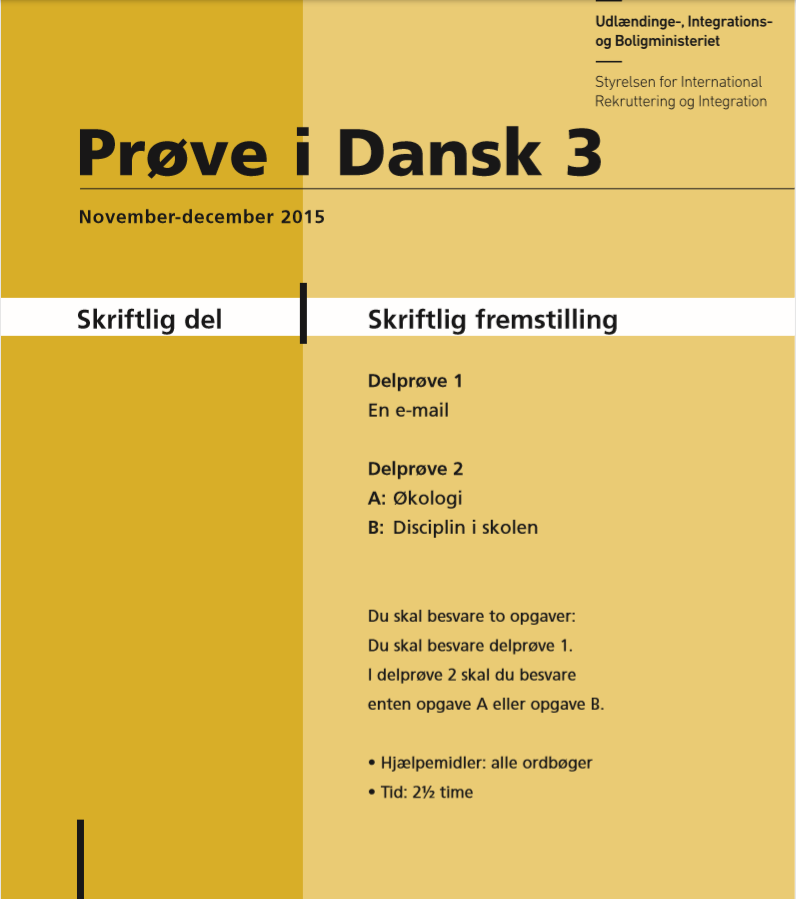
I’ve lived in Denmark for 6 years. I speak English every single day. My Danish? Barely non-existent.
But this year, everything changes.
To secure my future here, I have one clear target: Pass the Danish PD3 Exam.
This isn’t just a test; it’s my ticket to Permanent Residence (PR). And I’m treating it as a high-stakes experiment.
I’m not going to learn “the normal way.” I’m using my background in Cognitive Science.
I plan to crack the code of the Danish PD3 Exam in just 6 months.
Here is my strategy.
!(Alt Text: Study plan and books for the Danish PD3 Exam)
Why Aim for the Danish PD3 Exam? (The Stakes)
You might ask: “Why not just take the easier PD2?”
The difference is huge. It costs you time.
If you want to stay in Denmark long-term, look at the math:
- The PD2 Route (Easier): You must wait 8 years to apply for Permanent Residence.
- The Danish PD3 Exam Route (Harder): You can apply after just 4 years.
I’ve already been here for 6 years (2 years Master’s + 4 years work). Passing the Danish PD3 Exam means I can apply for PR immediately.
Failing means waiting another 2 years. I don’t like waiting.
My Secret Weapon: Cognitive Science
Most people learn languages by “feeling.” They watch TV, listen to radio, and hope it sticks.
That’s too slow.
I’m using Cognitive Science to optimize every minute of study. I won’t just “learn”; I will engineer my brain to absorb Danish.
My core strategy involves two pillars:
- High-Efficiency Input: No passive listening. I use active recall and spaced repetition to hack the forgetting curve.
- Immediate Output: Every concept I learn gets turned into content (like this article). Teaching is the best way to learn.
The Danish PD3 Exam Structure: How to Hack the Score
To win the game, you must know the rules.
Many students fail the Danish PD3 Exam because they focus on the wrong things. They obsess over grammar books but fail to speak.
Here is the breakdown of the exam structure:
Day 1: The Written Part (Skriftlig)
- Reading Comprehension (Læsning)
- Written Production (Skriftlig fremstilling)
- Focus: Vocabulary and structure.
Day 2: The Oral Part (Mundtlig)
- Presentation (Prepared at home)
- Dialogue with other candidates
- Focus: Spontaneity and social flow.
The “Hidden” Scoring Hack
Here is the most important thing you need to know:
The Oral exam is weighted x2.
That’s right. Your speaking score counts double compared to your reading or writing.
- Write perfectly but speak poorly? You might fail.
- Write average but speak fluently? You will likely pass.
Based on the 12-point scale, you need an average of 2.0 to pass. The bar isn’t impossibly high, but the strategy matters.
My focus for the next 6 months is clear: 80% of my energy goes into Speaking.
Next Step
This is just the beginning of my “Permanent Residence Bet.”
Over the next few months, I will document every specific cognitive method I use to conquer the Danish PD3 Exam.
- How to memorize vocab without forgetting.
- How to practice speaking when you have no Danish friends.
- How to trick your brain into enjoying grammar.
If you want to save years on your PR application, follow along.
Let’s hack this language together.
Leave a Reply